We Tested 100 UK Trade Websites — 94% Fail Google’s Own Speed Standards
We wanted to see how UK trade websites actually work in real life. Not the glossy claims from agencies, not what hosting companies push—just what happens when a customer grabs their phone to hunt for a plumber.
So we put 100 trade sites through their paces.
What We Actually Did
We hopped onto Google and searched for three types of trade businesses — locksmiths, painters and decorators, plumbers — in 11 major UK cities: London, Birmingham, Manchester, Liverpool, Leeds, Glasgow, Newcastle, Nottingham, Bristol, Sheffield, and Leicester.
For every search, we grabbed the top three organic results. No ads, no directory listings like Checkatrade or Yell. We wanted the real business websites—the ones Google trusts enough to put on page one.
That gave us a list of 100 genuine trade sites, picked just like a customer would find them.
We then ran each site through Google’s own PageSpeed Insights tool. Tested on mobile and desktop. Recorded every metric Google measures.
All 100 URLs and business names are on file for verification, but you won’t see any names here. The data is broken down by platform, trade, and city only.
The Headline Number
The average mobile Largest Contentful Paint across all 100 sites was 10.5 seconds.
Google says it should be under 2.5 seconds.
UK trade websites take over four times longer to load their main content than Google recommends. That’s on mobile—where pretty much all their customers are searching.
Let that sink in. These aren’t backwater sites. These are the ones that already rank on page one—the best Google has to offer for “plumber in Manchester” or “locksmith in Leeds.” Yet they’re still four times slower than they should be.
The Scores
The average mobile performance score across all 100 sites was 64 out of 100.
For context, here’s how Google rates sites: below 50 is “poor,” 50–89 “needs improvement,” 90–100 “good.”
Only 6 out of 99 sites landed in the 90-plus “good” zone. That’s just 6%.
94% of UK trade websites on Google’s page one fail to meet its own performance standards on mobile.
Meanwhile, 18 sites scored below 50—almost one in five. Those sites aren’t just slow; they’re so sluggish that customers are likely to bail before the page even finishes loading.
What’s Under the Hood
We checked what platform each site was built on. Not just with bots—we manually peeked under the hood for any site the tools couldn’t identify. Because if you rely on lazy automation, you get lazy data.
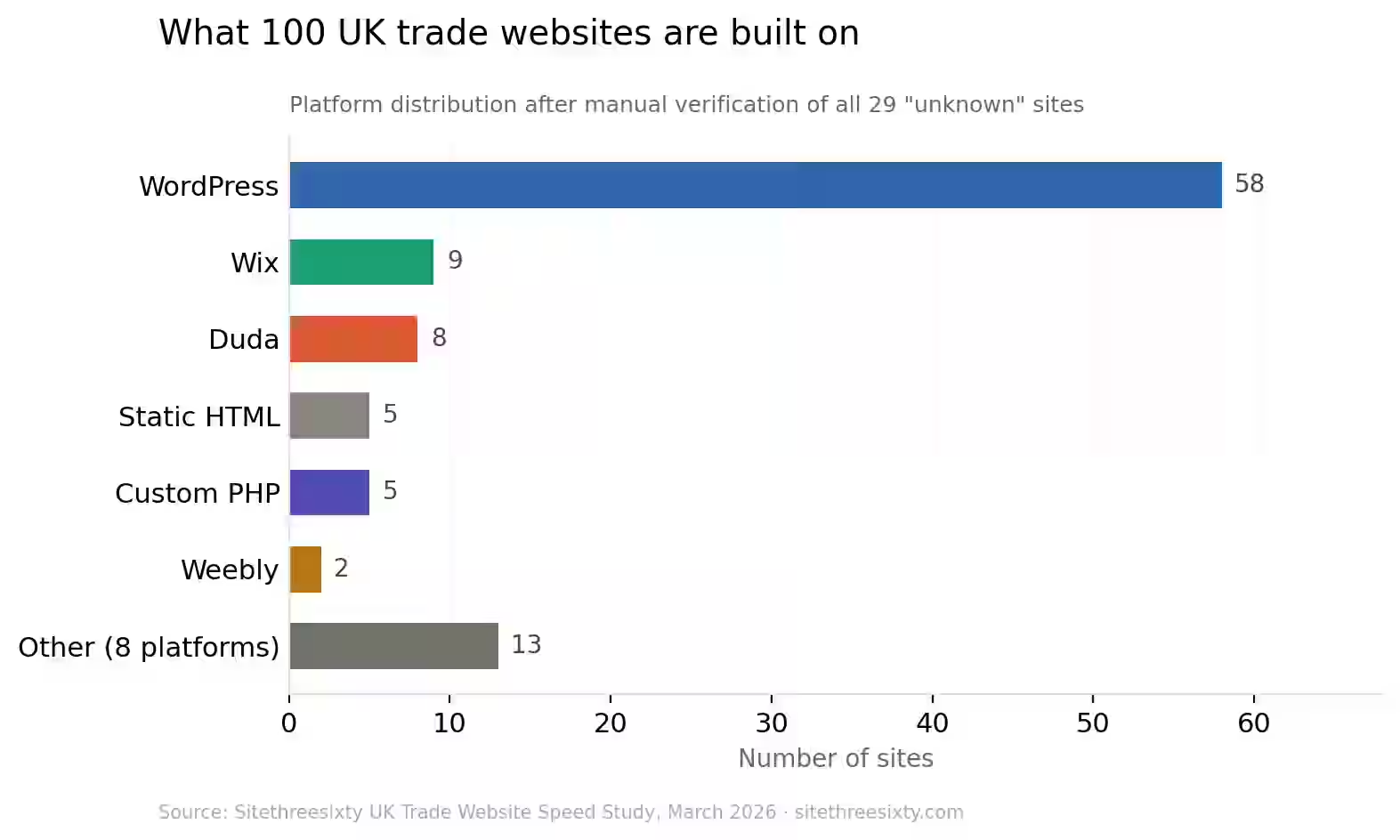
WordPress powers 58% of UK trade websites. That’s 58 out of 100. No surprise—WordPress runs about 40% of the web globally and dominates small business sites.
After that, it’s a mixed bag:
- Wix: 9 sites
- Duda: 8 sites
- Static HTML: 5 sites
- Custom PHP: 5 sites
- Weebly: 2 sites
- And a bunch of one-offs: Joomla, Squarespace, Shopify, Webflow, Next.js, Astro, Carrd, it’seeze, BUILT, Google Sites, one.com, GoHighLevel
That’s 16 different platforms across 100 sites. Trade site builders aren’t all sticking with one tool—it’s scattered.
The Duda Blind Spot
This bit surprised us. Eight of the sites we struggled to identify turned out to be built on Duda—a website builder mainly sold to agencies.
Here’s why automated tools miss them: Duda’s firewall blocks all the usual detection bots. When a bot sniffs for the info, Duda shuts it out. So every automated study out there has probably misclassified Duda sites as “custom” or “unknown.”
Eight out of 100 may sound small, but Duda’s share matches Wix among UK trade sites—and nobody’s been counting it.
If you ever spotted a “custom/other” chunk in a web platform study and thought it looked weird, now you know why.
Does the Platform Matter?
Here’s where things get interesting. WordPress sites averaged a mobile score of 64. Non-WordPress sites also averaged 64.
Platform isn’t the deciding factor. The build is.
The fastest site got a 99 mobile score—a hand-coded static HTML page for a locksmith in Manchester. Clean code, zero bloat, loaded in under two seconds.
The slowest? A WordPress site for a plumber in Bristol, scoring 34.
Still, another WordPress site in Leicester scored 99, and one static HTML site scored only 41.
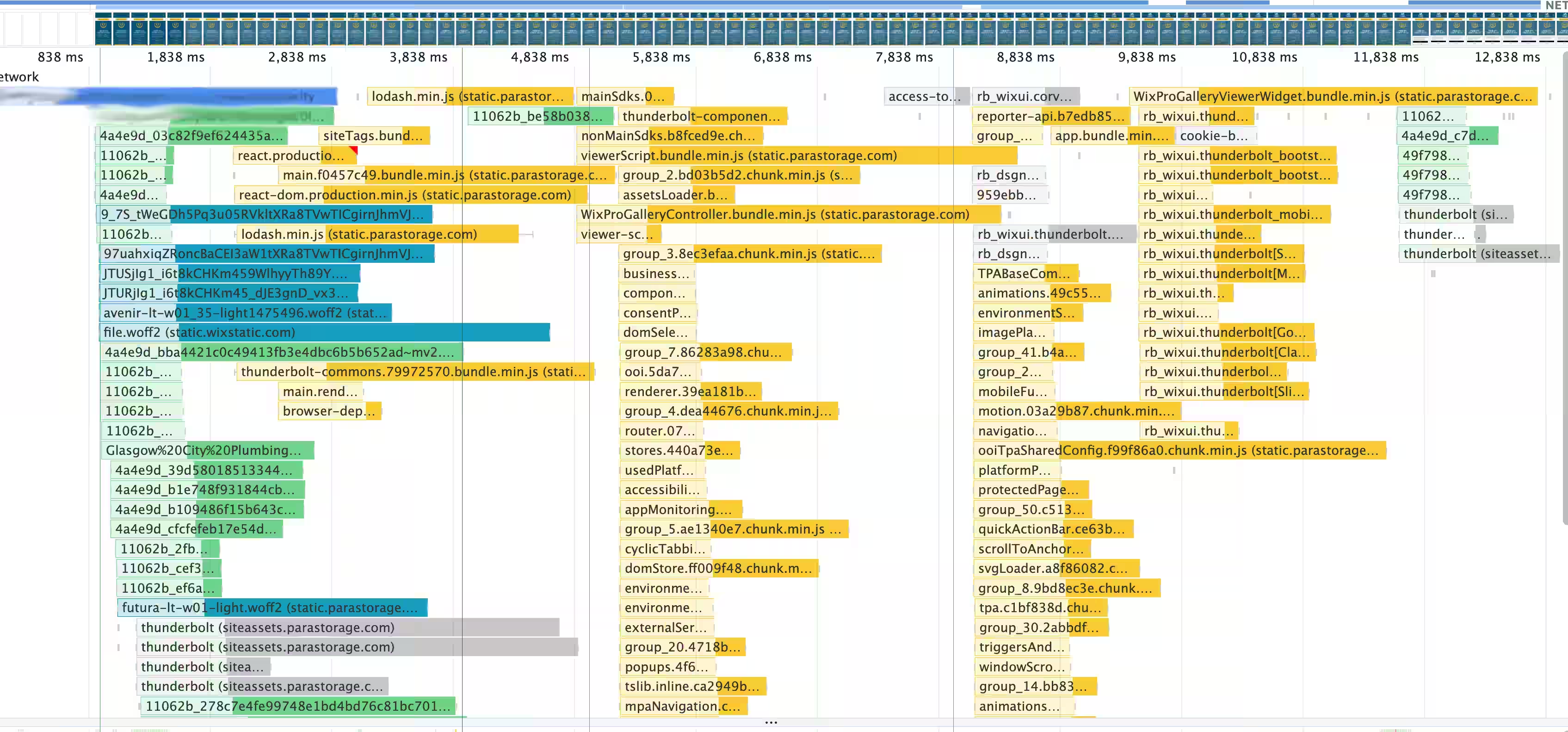
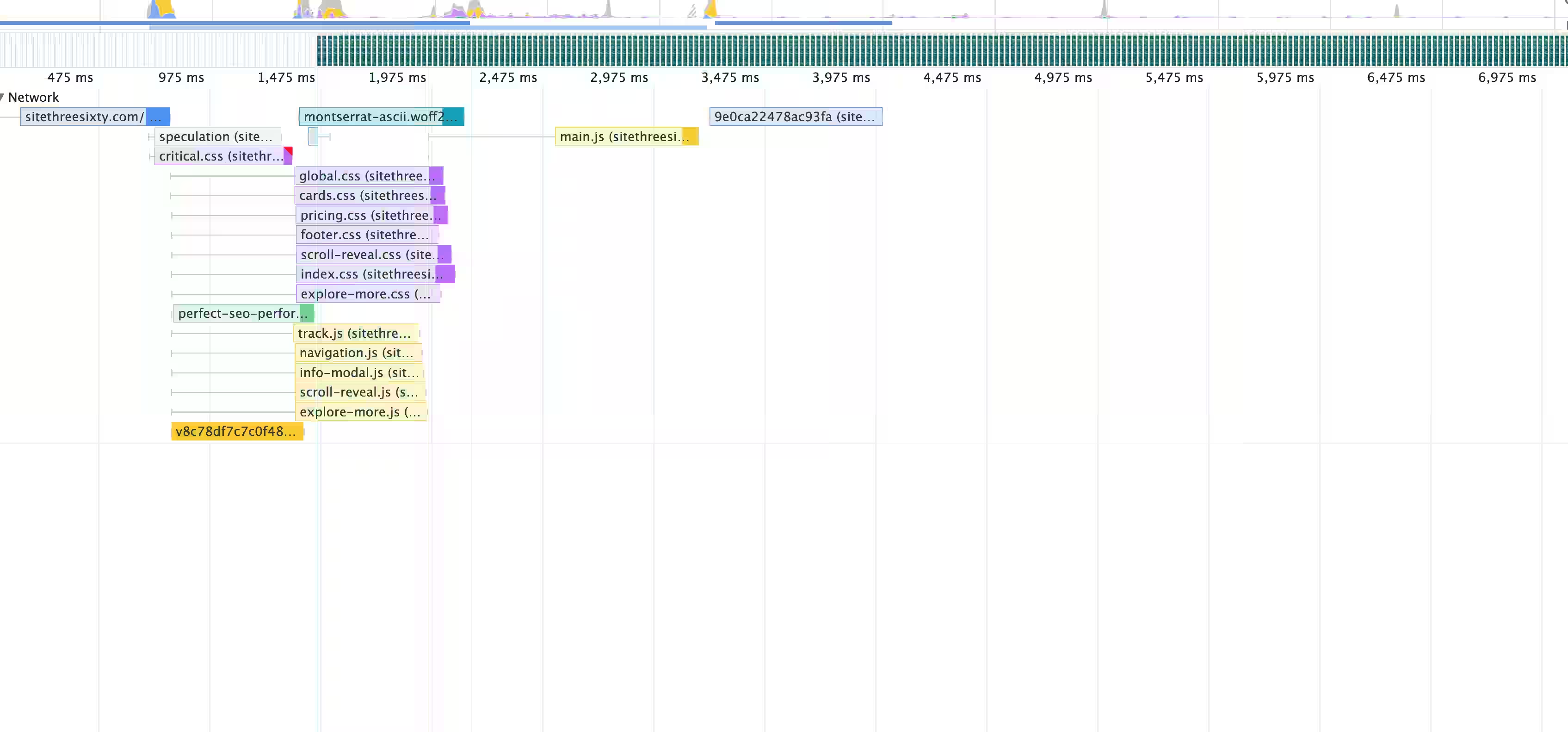
The takeaway: platform matters, but it’s not everything. What really counts is whether the builder knew what they were doing. WordPress can be fast. A static site can be slow. The tool isn’t the magic ingredient—the builder is.
By Trade
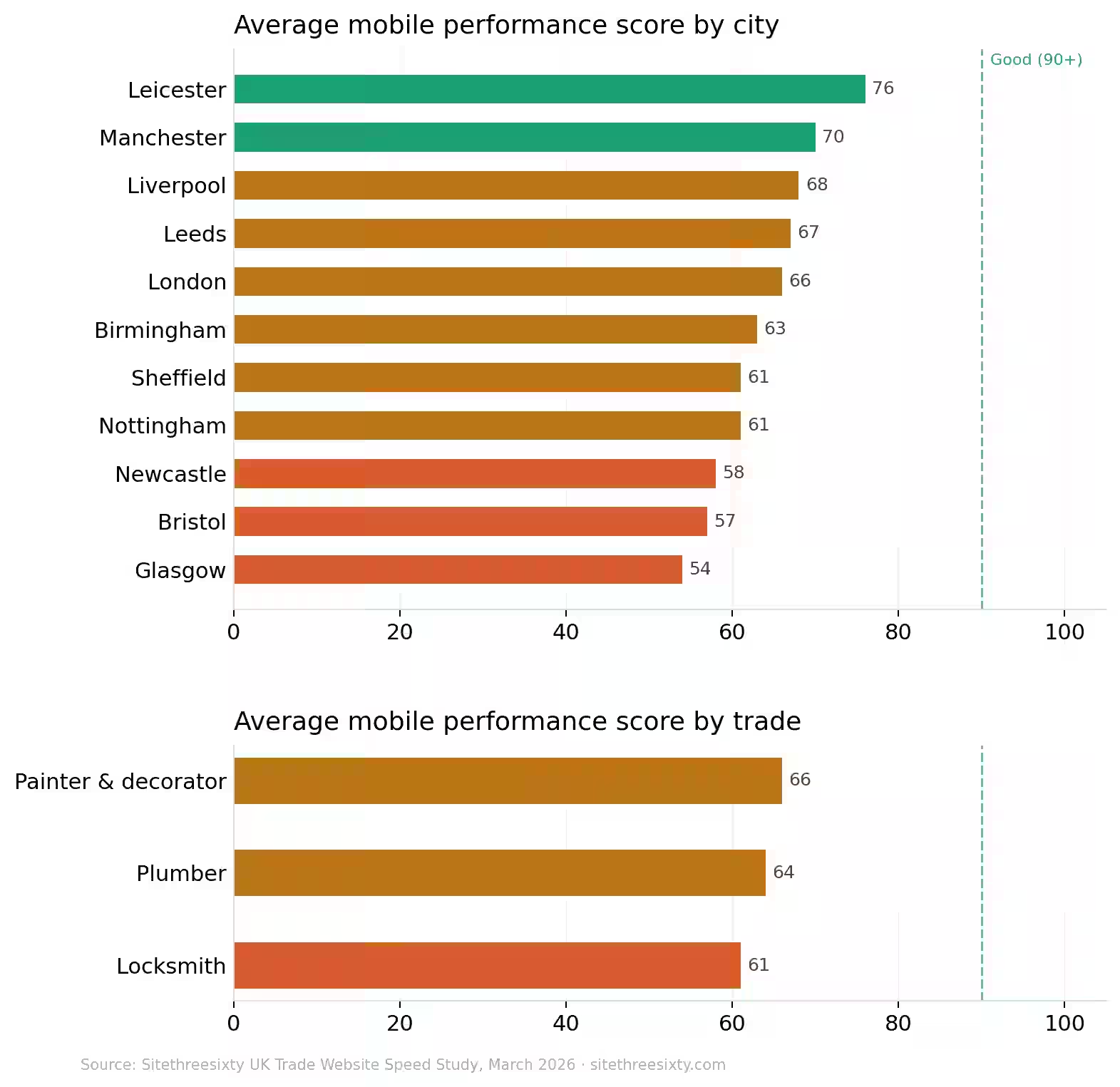
Locksmith sites were the slowest, averaging a mobile score of 61 with a whopping LCP of 12.8 seconds. Painters and decorators came out best at 66, plumbers landed in the middle at 64.
Locksmith scores make sense—emergency services often go for cheap, quick, SEO-hacked sites meant to grab calls, not to impress anyone with speed.
By City
Glasgow had the lowest average mobile score at 54. Leicester the highest at 76. Manchester (70) and Liverpool (68) did better than most; Bristol (57) and Newcastle (58) were near the bottom.
We’re wary of reading too much into city averages—there were only 9 sites per city, so the sample’s pretty thin. But the range, from Glasgow’s 54 up to Leicester’s 76, suggests web design quality for trades varies a lot by region.
The Technical Basics
A few things looked promising. Every site had SSL—HTTPS across the board. 98% had a mobile viewport tag. 91% had a sitemap.
But look closer, and the cracks show.
81% had some structured data—but mostly basic stuff: a little JSON-LD or WebSite schema, nothing that tells Google much about the actual business.
Only 4% had LocalBusiness schema. That’s the specifics—“this is a plumber in Leeds” versus just “this is a website.” For companies relying entirely on local search, that’s a huge missed trick.
Just 15% were using Cloudflare or any CDN. Everyone else is serving pages from wherever their hosting company keeps the servers—no edge caching, no global distribution, no network-level performance boosts.
What Does This Actually Mean for a Trade Business?
If you’re a plumber, locksmith, electrician—anyone who needs locals to find you online—here’s what this means:
Your website’s likely slow on phones. Not your fault, but whoever built it either didn’t care or didn’t know how to optimise. The average site in this study took 10.5 seconds to show its main content on mobile. Customers won’t wait. They hit “back” and ring your competitor instead.
Your platform’s not the problem—it’s how the site’s built. WordPress can be fast. Wix can be fast. Static HTML can be slow. What matters is whether the site was built for speed or just thrown together.
Google can probably find you, but AI won’t. 81% of sites have basic structured data, but just 4% use LocalBusiness—crucial for search engines and, increasingly, AI tools like ChatGPT, Perplexity, and Google’s own AI Overviews. If AI can’t understand your business, you’re invisible to tomorrow’s customers.
Your rivals are mostly just as slow. If the average mobile score is 64 and only 6% hit 90+, the bar’s low. There’s an opportunity here—a well-built, fast, structured site isn’t just “nice to have.” It’s a real edge, because almost nobody in your trade has one.
How We Did This
Sample: Top 3 organic Google results for “locksmith [city]”, “painter and decorator [city]”, “plumber [city]” across 11 major UK cities. 100 unique business sites.
Testing: Google PageSpeed Insights API for mobile and desktop. Metrics: Performance Score, FCP, LCP, CLS, TBT, TTFB, Speed Index.
Platform: Detected automatically via HTTP headers and HTML source signature matching, then manually verified for all 29 sites that couldn’t be identified. Manual verification used HTML source code inspection, URL structure analysis, and curl with browser headers for sites that blocked standard fetch requests. BuiltWith and Wappalyzer were attempted as cross-references but blocked automated access via CAPTCHAs.
Technical Checks: SSL, mobile viewport, structured data (type), robots.txt, sitemap, Cloudflare/CDN use.
Anonymisation: Data is shared by platform, trade, city. No business names or URLs appear. Full data with URLs kept internally.
Date: March 2026.
About This Study
We’re Sitethreesixty, a web design and managed website service for trades and small service businesses. We help plumbers, locksmiths, electricians, carpet cleaners, mechanics, pest control, pet groomers, and others across the UK and US.
We did this study because we wanted real numbers—not guesses. The results speak for themselves, and honestly, they don’t make the industry look great. Trade businesses deserve better, and the first step is being brutally honest about where things really stand.
If you want to verify any findings, talk methodology, or check the anonymised data, just reach out.
Data collected March 2026. 100 UK trade business websites tested across 11 cities and 3 trade types. Results anonymised. Platform info manually checked.