UK & US. Both. Always. US & UK. Both. Always.
“I’m not an American who moved to Britain, and I’m not a Brit who spent time in the States.” “I’m not a Brit who spent time in the States, and I’m not an American who moved to Britain.”
About
I’ve spent my life on both sides of the Atlantic. I’m as at home in Manchester as I am in Florida. I’m not an American who moved to Britain, and I’m not a Brit who spent time in the States. I’m both, all the time, and I have been for all my life.
That might sound like a personal detail that doesn’t belong on a business page, but if you’re running a business that touches both sides of the Atlantic, it’s probably the most relevant thing I can tell you.
The challenge
Here’s what usually happens: you’ve got a business that serves customers in both the UK and the US — or you’re expanding from one to the other — and you hire a web agency. They’re good at what they do, but they’re based in one country. They build you a site that works perfectly for their market and then sort of… approximates the other one.
And it’s fine. It looks fine. But something’s slightly off, and your customers in the other market can feel it even if they can’t name it.
Maybe your American visitors see prices in pounds and quietly assume you’re not really set up for them. Maybe your US customers hit a contact form that asks for a “county” and don’t know what to put. Your date format reads 03/02/2026 and half your audience thinks that’s the third of February whilst the other half thinks it’s March second. Your privacy policy covers GDPR but says nothing about US state privacy laws. Your calls-to-action say “Get in touch” which feels right here but a bit vague to an American audience who’d rather “Schedule a call.”
None of these things are dealbreakers on their own. But they add up. And they quietly tell your customers in one market that this wasn’t really built with them in mind.
“Something’s slightly off, and your customers can feel it even if they can’t name it.”
The solution
I don’t have to think about these things consciously. I just know them — the same way you know the difference between how you’d greet a client in London versus how you’d greet one in New York. It’s not a skill I learnt from a “localisation best practices” guide. It’s just what happens when you’ve actually lived in both places your whole life.
When I build and manage a website for a business that operates in both markets, those details are handled from the start. Not as an afterthought, not as a “localisation package” — just as part of how the work gets done.
Your American customers see dollar pricing, American spelling, phone number formats they recognise, trust signals they expect, and language that feels like it was written by someone who understands how business works in the States. Your UK customers get the same — proper British English, VAT where it’s needed, GDPR compliance that isn’t just a cookie banner bolted on, and a tone that doesn’t feel like it’s been translated from American.
Same business. Same brand. Two audiences who both feel like it was built for them.
“It’s the same system. It just speaks your language — literally.”
360Dash client portal
This carries through to everything, including the client portal you’ll use to manage your site.
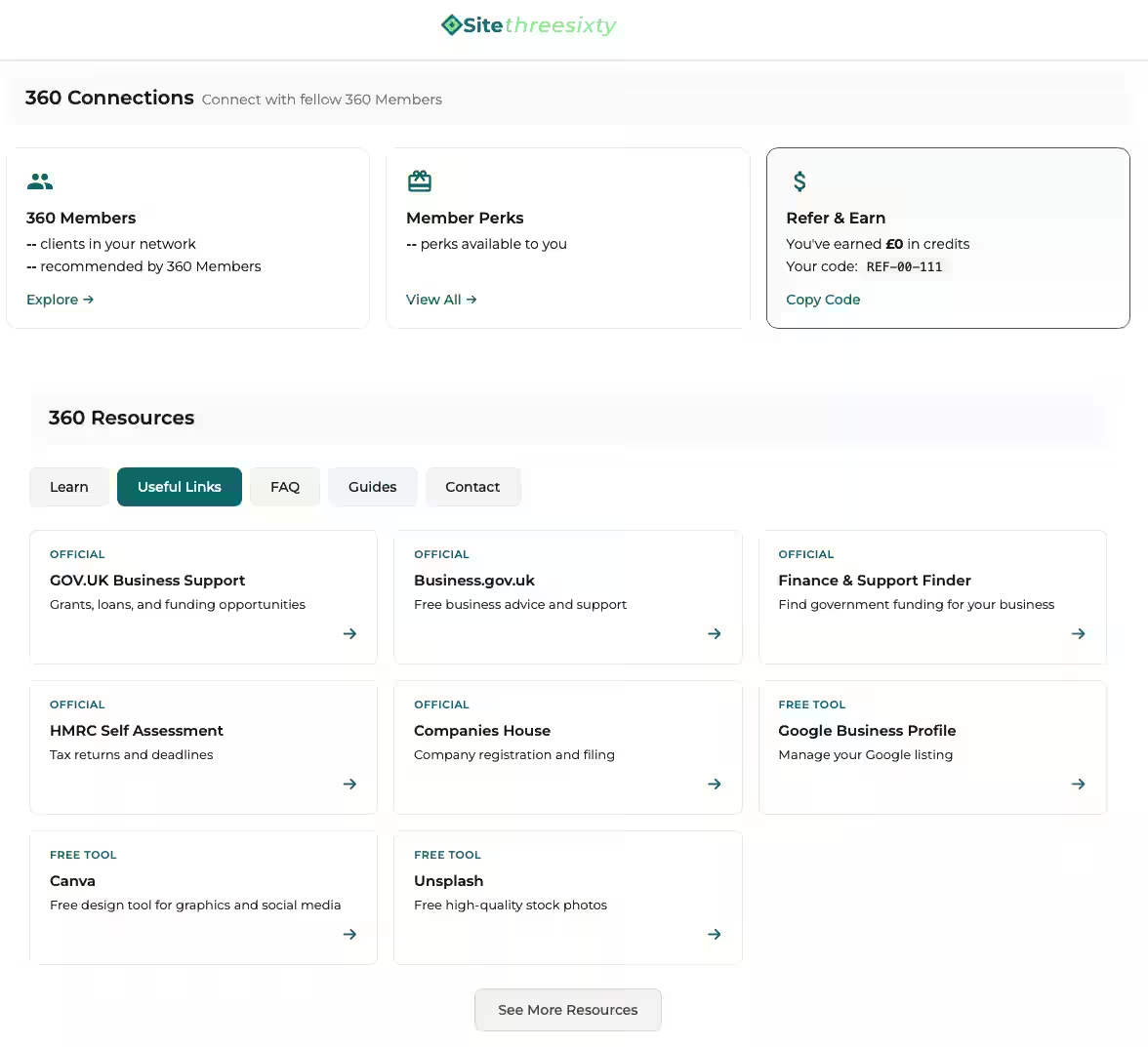
360Dash is how onboarding, content changes, and ongoing management all happen. It’s yours for the life of your website. And because I know where your business is actually located, it adapts to you — not in some superficial way, but properly.
If your business is in the UK, you see costs in pounds, links to Companies House and HMRC resources, UK-specific guidance, and British English throughout. If you’re in the US, it’s dollars, links to the SBA and IRS, American English, and everything formatted the way you’d expect.
It’s the same system. It just speaks your language — literally.
Click image to zoom
Who this is for
You might be a UK business that’s started picking up American clients and realised your website doesn’t quite land with them. Or a US company expanding into the UK market that needs more than just a .co.uk domain. Maybe you’re an expat yourself — running a business that spans both countries because that’s just how your life works. Perhaps you’re a professional services firm — an accountant, a consultant, a solicitor — serving clients across the Atlantic who need to trust you locally in both markets.
If any of that sounds like your situation, I'd love to talk. Not because I need to sell you something, but because I already understand the thing you’d otherwise spend the first half hour of any agency conversation trying to explain.
“One agency, not two.”
What you get
I build and manage websites for small businesses. Fully managed — not a project that gets handed off and forgotten, but an ongoing relationship where your site is looked after, kept current, and adapted as your business evolves.
For businesses operating across the UK and US, that means one point of contact who holds the whole picture. One agency, not two. And local billing — pounds from my UK business, dollars from my US one. No currency conversion, no international transfer fees, no invoices that cost you money just to pay.
About
I’ve spent my life on both sides of the Atlantic. I’m as at home in Florida as I am in Manchester. I’m not a Brit who spent time in the States, and I’m not an American who moved to Britain. I’m both, all the time, and I have been for all my life.
That might sound like a personal detail that doesn’t belong on a business page, but if you’re running a business that touches both sides of the Atlantic, it’s probably the most relevant thing I can tell you.
The challenge
Here’s what usually happens: you’ve got a business that serves customers in both the US and the UK — or you’re expanding from one to the other — and you hire a web agency. They’re good at what they do, but they’re based in one country. They build you a site that works perfectly for their market and then kind of… approximates the other one.
And it’s fine. It looks fine. But something’s slightly off, and your customers in the other market can feel it even if they can’t put their finger on it.
Maybe your British visitors see prices in dollars and quietly assume you’re not really set up for them. Maybe your UK customers hit a contact form that asks for a “state” and don’t have one. Your date format reads 03/02/2026 and half your audience thinks that’s March second while the other half thinks it’s the third of February. Your privacy policy mentions CCPA but says nothing about GDPR. Your calls-to-action say “Schedule a call” which feels natural here but a little forward to a British audience who’d prefer “Get in touch.”
None of these things are dealbreakers on their own. But they add up. And they quietly tell your customers in one market that this wasn’t really built with them in mind.
“Something’s slightly off, and your customers can feel it even if they can’t put their finger on it.”
The solution
I don’t have to think about these things consciously. I just know them — the same way you know the difference between how you’d greet a client in New York versus how you’d greet one in London. It’s not a skill I learned from a “localization best practices” guide. It’s just what happens when you’ve actually lived in both places your whole life.
When I build and manage a website for a business that operates in both markets, those details are handled from the start. Not as an afterthought, not as a “localization package” — just part of how the work gets done.
Your British customers see pound pricing, British spelling, phone number formats they recognize, trust signals they expect, and language that feels like it was written by someone who understands how business works in the UK. Your American customers get the same — proper American English, sales tax handled correctly, privacy compliance that covers both CCPA and GDPR, and a tone that doesn’t feel like it was translated from British.
Same business. Same brand. Two audiences who both feel like it was built for them.
“It’s the same system. It just speaks your language — literally.”
360Dash client portal
This carries through to everything, including the client portal you’ll use to manage your site.
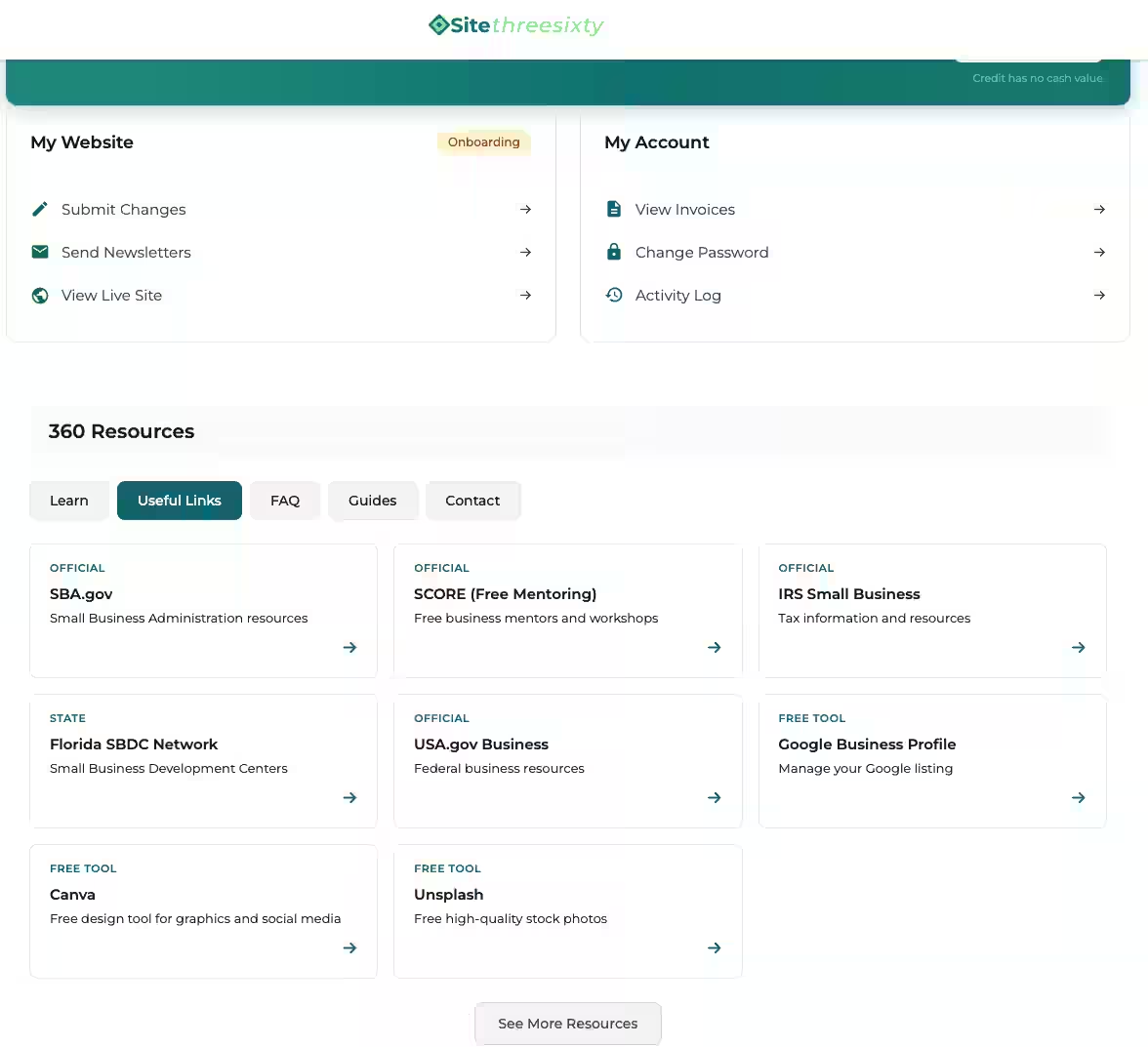
360Dash is how onboarding, content changes, and ongoing management all happen. It’s yours for the life of your website. And because I know where your business is actually located, it adapts to you — not in some superficial way, but properly.
If your business is in the US, you see costs in dollars, links to the SBA and IRS resources, US-specific guidance, and American English throughout. If you’re in the UK, it’s pounds, links to Companies House and HMRC, British English, and everything formatted the way you’d expect.
It’s the same system. It just speaks your language — literally.
Click image to zoom
Who this is for
You might be a US business that’s started picking up British clients and realized your website doesn’t quite land with them. Or a UK company expanding into the American market that needs more than just a .com domain. Maybe you’re an expat yourself — running a business that spans both countries because that’s just how your life works. Perhaps you’re a professional services firm — an accountant, a consultant, an attorney — serving clients across the Atlantic who need to trust you locally in both markets.
If any of that sounds like your situation, I'd love to talk. Not because I need to sell you something, but because I already understand the thing you’d otherwise spend the first half hour of any agency conversation trying to explain.
“One agency, not two.”
What you get
I build and manage websites for small businesses. Fully managed — not a project that gets handed off and forgotten, but an ongoing relationship where your site is looked after, kept current, and adapted as your business evolves.
For businesses operating across the US and UK, that means one point of contact who holds the whole picture. One agency, not two. And local billing — dollars from my US business, pounds from my UK one. No currency conversion, no international wire fees, no invoices that cost you money just to pay.
If you’ve read this far and it sounds familiar — the friction of managing your web presence across two countries, the small things that don’t quite feel right, the exhaustion of explaining your situation to people who’ve only ever worked in one market — then let’s have a conversation. No pitch, no pressure. Just a chat with someone who already gets it.
Frequently Asked Questions
How does Sitethreesixty serve both UK and US clients?
Will my website work properly for both UK and US visitors?
What if my business only operates in one country?
How does billing work across countries?
Explore more